

You are the head of housekeeping, and you know what happened on the 28th. It was a full departure day: 34 rooms out, 31 rooms in, four attendants. Nobody was slow. Everybody was busy. They were just busy in the wrong order.
So let us run that morning twice. Once as it went, and once as it could have gone, with the same people, the same rooms and the same guests. Only the information changes.
As it wentHousekeeping office · 08:30
You print the list, and the list is sorted by room number
The report comes out of the printer the way it always does: first floor first, room 101 at the top. You split it into four stacks by floor and hand them out. Marta gets the second floor, which starts at 201 and reaches 214 somewhere after eleven.
Room 214 is a departure with an arrival behind it. The couple in it now leave at 10:40. The couple coming in arrive at 15:00. On the printout it is line 14 of Marta's stack, between a stayover and an empty room.
Where it gets lost
The order is lost. A list sorted by room number follows the corridor, not the guests. It treats a room somebody is waiting for exactly like a room nobody needs until tomorrow.
How to close it
Sort the run by who is waiting, not by where the room is. Mark every room with two facts before 08:30: has the guest left, and is somebody arriving today. Those two facts decide the order. The floor only decides who walks there.
As it could goHousekeeping office · 08:30
The same list, ranked by who is waiting
Same printer, same rooms. This time the list is ranked. At the top, a room whose guest has already left and whose next guest arrives today. Then the other rooms that turn over today. Then departures with nobody behind them, then stayovers, and the empty rooms last.
Room 214 is not yet empty at 08:30, so it sits near the top, waiting to jump.
Where it gets lost
The rooms nobody knows about are lost. Three rooms have no status at all: somebody forgot to mark them last night. A tidy list quietly treats them as clean.
How to close it
A room without a known status is a dirty room until somebody has looked. Guessing "clean" is how a guest walks into yesterday's towels.
As it wentBreakfast room · 10:40
The breakfast room sees 214 leave, and keeps it to itself
At 10:40 the couple from 214 walk past the breakfast room with their suitcases. The waiter clearing table six says goodbye. He knows the room is free. So does the front desk, which checks them out two minutes later.
Marta does not. She is on the second floor doing stayovers in room order, and she knocks on 214 at 12:35.
Where it gets lost
Two hours are lost. The departure was known at two places in the building, and at neither of them was it anybody's job to tell the floor.
How to close it
The checkout is the signal. The moment the desk checks a guest out, the room should turn dirty on the list the floor is reading, without a phone call. If that is not possible yet, the desk calls housekeeping for every turnover that leaves before noon, and only for those.
As it could goFront desk · 10:42
The checkout moves 214 to the top
The desk checks the couple out at 10:42. Room 214 turns dirty, and because its next guest arrives at 15:00, it goes to the top of the run. Marta finishes the room she is in and walks over.
The other three attendants are not fighting over her floor. At 08:30 you ticked who was working, and the rooms were shared out floor by floor, each run about the same amount of work.
Where it gets lost
The fair split is lost, when it is done by floor alone. A floor of departures is a heavier morning than a floor of stayovers, and four equal stacks of paper are not four equal mornings.
How to close it
Share the run by workload, not by floor count: a departure weighs more than a stayover. Keep each person's rooms next to each other so nobody crosses the building twice.
15:00Front desk · both mornings
The anniversary couple arrives
As it went: Sara at the desk offers coffee and a seat in the lounge. Room 214 is inspected at 16:15. The e-mail is written that evening.
As it could have gone: room 214 was inspected at 13:50. Sara hands over the key and the couple are upstairs before the lounge has seen them.
Where it gets lost
The first hour is lost, and it is the one guests remember.
How to close it
At 13:30, look only at the rooms with an arrival before 16:00 that are not clean yet. That short list is your afternoon. Everything else can wait.
The same morning, with the cleaning order in Livion
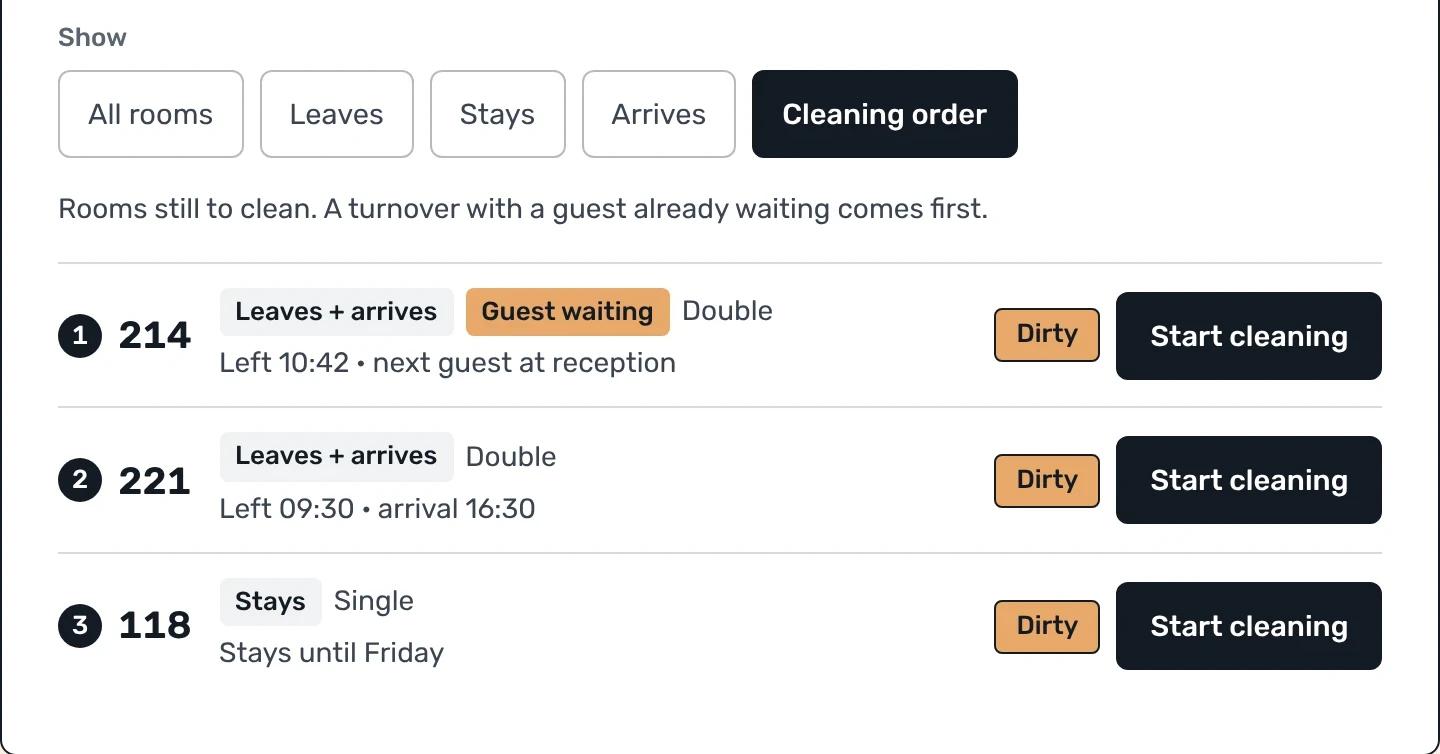
Livion is hotel operations software that works alongside your PMS. In Livion Rooms the cleaning order is worked out from who has left and who is coming, and it changes when they do:
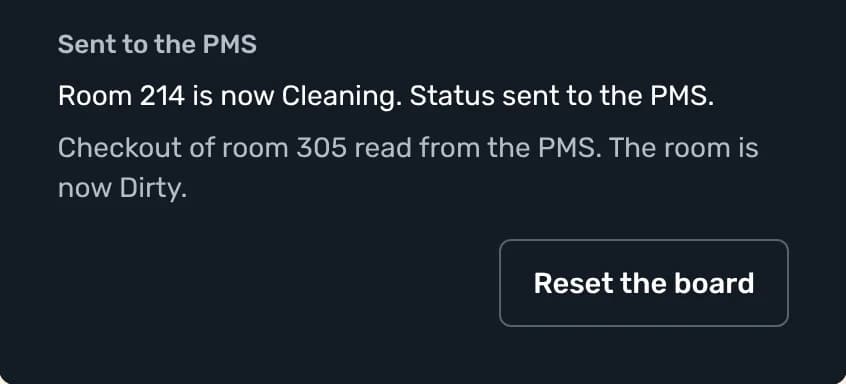
- With your PMS connected, a checkout marks the room dirty, and the board sorts the cleaning run by priority.
- A room whose guest has left and whose next guest arrives today comes first. A room nobody is waiting for goes to the end.
- A room without a known housekeeping status counts as not clean, never as clean.
- "Plan the day": tick who is working, and every room that still needs cleaning is shared out among them, floor by floor, each run about the same workload.
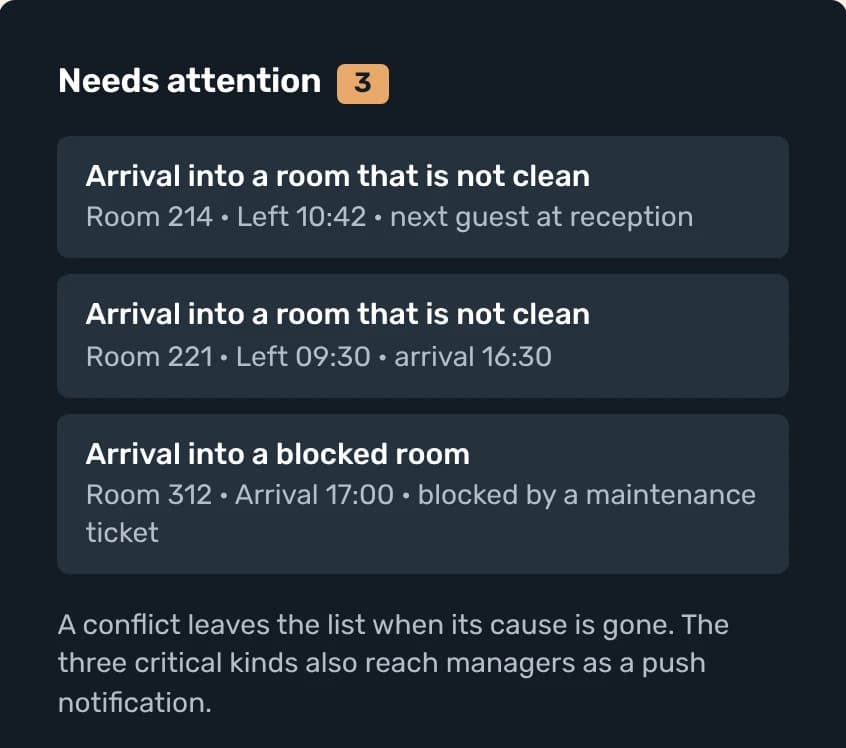
- An arrival into a room that is not clean shows up under Needs attention.
- Housekeeping moves rooms from Dirty to Cleaning, Clean and Inspected, and the PMS is told.
Bring the printout from your last full departure day to a demo, and we will run that morning through Livion with you.
More field notes
Out‑of-order hotel rooms: who blocks, who releases, and why room 318 stayed blocked all week
A window fixed on Tuesday, a room still off sale on Wednesday, a guest moved at ten on Thursday. One technician's notes show where an out-of-order room goes wrong.
Read the noteCharging dinner to the room: how the bill gets lost between the waiter and the folio, over one guest's three nights
At checkout the guest in room 14 finds two dinners he never ate, and his own are missing. Follow his three nights and see where a room charge goes astray.
Read the note